DejaBlue’s new plug-and-play device helps companies save thousands on EV charging costs
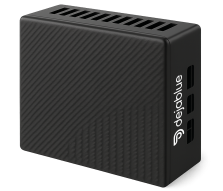
DejaBlue, a leading provider of intelligent EV charging infrastructure for commercial sites, today announced the launch of DejaSense, a plug-and-play optimization module that automatically aligns EV charging with on-site solar energy production. The system helps businesses reduce energy costs while maximizing the use of self-produced, renewable electricity.
dejasense.002.png
DejaSense integrates seamlessly with OCPP-compliant chargers and all solar installations. Installed near the site’s electrical panel, the system continuously measures both solar production and site consumption. A proprietary AI engine coordinates charging across all EV stations, intelligently shifting demand to coincide with solar peaks, typically around midday. Sites can easily see a 20-30 percent increase in self-consumption and measurable monthly savings. For a typical SME charging 10 vehicles per day, this can represent over €600 in avoided energy costs each month, with the potential savings for large sites measuring thousands of euros per month.
Towards increasingly smart, optimised EV charging
In most daytime or multi-day EV charging scenarios, vehicles are often plugged in and left parked for many more hours than is needed to charge the vehicle. These cases can span a number of hours or days, such as seen in airport parking lots, multinational company corporate offices and or even university campuses. In these types of locations, there is no need to charge the vehicle as soon as it is plugged in. The DejaSense kit optimizes the charge rate so that it coincides with peaks in solar energy production, instead of immediately drawing electricity from the public grid right in the morning before the sun fully out. This helps maximize the use of the solar energy produced on the site while still ensuring that all vehicles receive a full charge by the time the vehicle leaves the charging station.
Site managers can easily manage charging operations, while users can choose between two settings:
● Eco: Charging will optimize for utilize solar energy while still ensuring the vehicle is charged within the communicated time
● Priority: The vehicle will begin charging immediately, irrespective of the solar energy available.
In overcast conditions, the system switches to the public electricity grid to ensure uninterrupted supply.
dejasense.003.png
Comepa, a leading expert in technological innovation and precision manufacturing, was one of the first clients to test this new offer. With 10 charging stations on a site with a capacity of 140 kVA, coupled to a 120 kWp solar panel, the company was able to reduce its dependence on the public grid by 30%, increasing its consumption of solar energy derived onsite by 23%.
The kit retails starting at 880 Euros plus the cost of the specific sensors for the site, with most sites expecting a full return on investment from the electricity savings within 3-6 months.