Two thirds of UK parents say shared storytelling has revealed a side of their child they never knew existed
Two thirds of UK parents (66%) say shared storytelling has revealed a side of their child’s imagination they never knew existed, according to The Imagination Index, new research by Kinder Chocolate. The findings celebrate the magic of co-created storytelling and the surprising, joyful places children’s imaginations can lead when given the freedom to guide the story.
The Imagination Index surveyed 2,000 UK parents of children aged 3–9, exploring how children’s imaginations develop at different ages, how co-creating stories strengthens the parent-child bond, and what happens when children take ownership of characters, settings and outcomes.
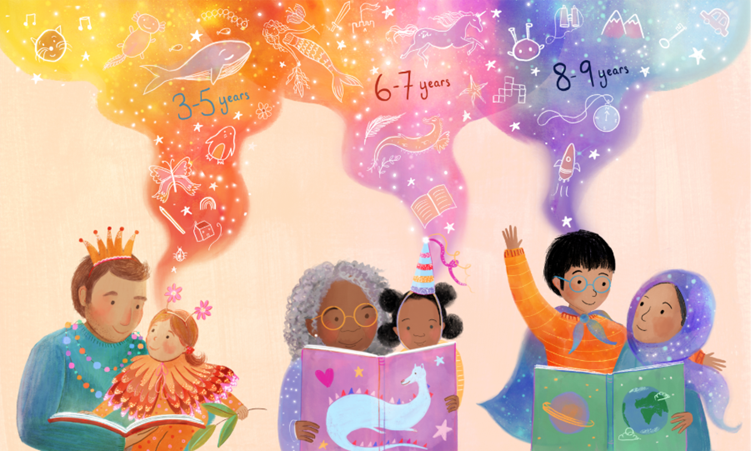
To bring the findings to life, Kinder Chocolate has partnered with illustrator Gillian Eilidh O’Mara whose hero illustration captures the imaginative worlds children inhabit at different ages, from the creatures and playfulness of the under-5s, to the adventure-seeking 6–7-year-olds, to the bold, self-directed storytelling of 8–9-year-olds.
Gillian Eilidh O’Mara, illustrator; “Telling stories together is one of the most powerful ways to foster connection and imagination, and to empower families and communities to co-create the kind of world they wish to live in. While working with families for fourteen years on storytelling projects, I’ve had the privilege to see how this activity strengthens relationships, gives children confidence and improves enjoyment in storytelling. What I love most is seeing what happens when children are given the freedom to lead the story – shaping the characters, settings and adventures in ways adults would never imagine. Children are uniquely placed to invite us back into a magical world we may have forgotten about.”
Imagination Unlocks Learning
Behind every shared story is a child discovering something new about themselves and the world around them. Parents say storytelling has helped their child learn new words (53%), improve listening skills (49%), grow in confidence (46%) and show more empathy (36%) – proof that benefits of shared storytelling extend far beyond the story itself.
The Developmental Arc
Nearly half of parents (49%) say the biggest shift in their child’s story preferences happens between ages 3 and 5. Under-5s gravitate towards animals and playfulness with 36% drawn to creature-led stories.
By ages 6–7, fantasy (26%) and adventure (24%) take over, and children begin wanting to shape the story themselves, with 14% already choosing stories they helped create.
By ages 8–9, children’s desire to shape their own stories has nearly doubled since the early years, rising from 9% at ages 3–5 to 17%, with a growing appetite for mysteries (27%) and more complex narratives, a reminder that children’s imaginations are always one step ahead.
Two: Everyday Objects
The most powerful storytelling moments are often the most spontaneous and children’s creativity needs no budget. More than half (56%) have turned a cardboard box into a story, and three quarters of parents (76%) say their child is more engaged when co-creating a story than when being read one.
And storytelling has long outgrown bedtime: 44% of parents use stories for learning, 43% during imaginative play and 36% during car journeys and daily transitions.
Almost every parent (96%) says shared storytelling strengthens their bond with their child. A further 41% say it helps their child open up about feelings they wouldn’t share otherwise, and 29% say they are more likely to learn about their child’s hopes and dreams through stories than through direct conversation.
To bring the research findings to life, Kinder Chocolate worked with Dr Elizabeth Kilbey, one of the UK’s leading child and family clinical psychologists and a member of Kinder’s Value of Play panel – an expert advisory group dedicated to championing the role of play and imagination in childhood development.
“When children have the freedom to shape a story, something really important happens. They’re not just consuming a narrative, they’re expressing how they see the world, testing ideas, and processing emotions that might be difficult to put into words. In this way co-created storytelling is an emotional rehearsal. What strikes me most is how often parents discover sides of their child’s imagination they’d never seen before. That’s because when a child leads, they have the freedom to go wherever their imagination takes them. Digital play like Let’s Story makes interactive storytelling accessible and easy to weave into daily life, helping to facilitate real, meaningful interaction between parent and child.”