D-Day veteran shares reflections from his new book, ‘A Century of Memories’
Screenshot
Bernard Morgan, a 102-year-old D-Day veteran, has spoken to GB News about a new book which contains reflections on his experiences on that historic day.
“I was youngest RAF sergeant to land in Normandy on D-Day, and my youth and innocence did not prepare me for what I saw through a small square window in our vehicle.
“The beach was littered with British dead bodies: some had been shot, and others carried in by the incoming tide.
“It was a sight never to be forgotten, as I had never seen a dead person before.”
The words of Bernard Morgan, a codebreaking specialist who landed on Gold Beach on the 6th of June, 82 years ago.
GB News reporter Sophie Reaper writes:
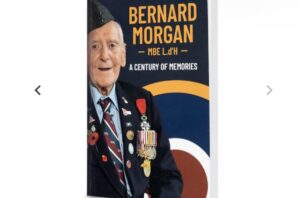
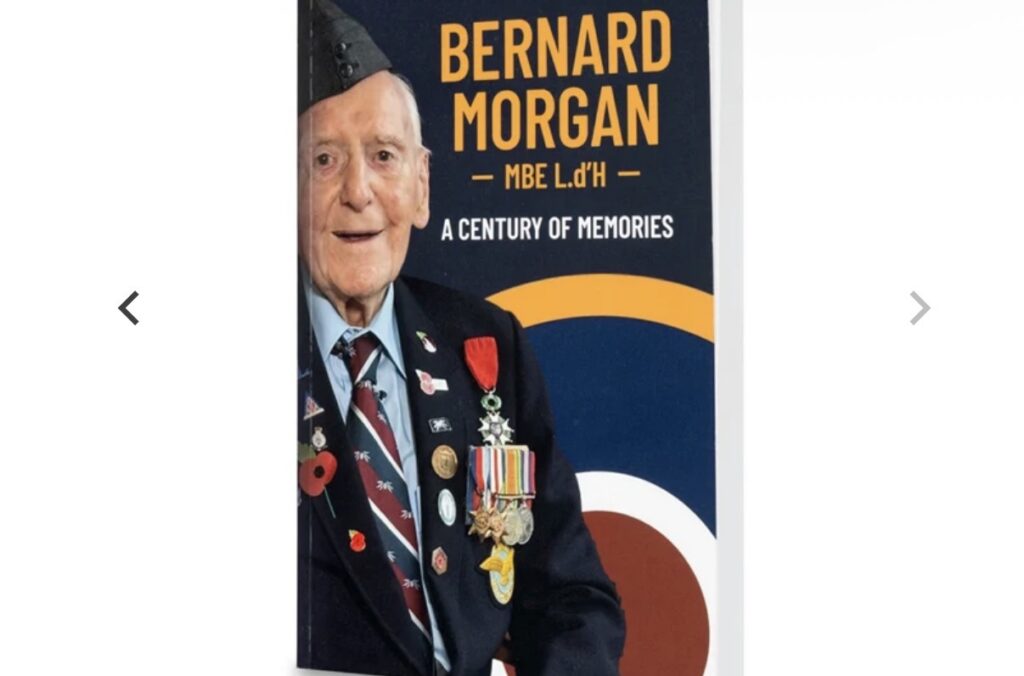
Now 102-years old, a book entitled ‘A Century of Memories’ has been written in his honour – with all profits being donated to the Royal British Legion.
I’ve known Bernard for almost five years now, and was honoured when he said he wanted me to be the one to interview him about his story and this new book.
I first met him in 2021, when I interviewed him in his home. Across the years, we’ve seen each other on several occasions, most notably for me at the 80th anniversary of D-Day; when I had the chance to interview him live from the Bayeux War Cemetery.
It was highly emotional, and it genuinely had a profound impact on me which I’m sure will stay with me throughout the rest of my life.
When I sat down with him to talk about his new book ahead of this Remembrance Day, I didn’t know what to expect. But what I got was more special than I can even put into words.
He told me stories about his life – not just his time serving in the RAF, but long beyond that. He told me tales of his hobbies (he almost competed in the Olympics in the 1500m event!), titbits about his family, and reflected on the importance of the Poppy Appeal.
But, once again, one thing that really struck me was his obvious humour and cheekiness. That certainly hasn’t waned with age.
I asked him about signing up at such an early age, to which he replied he did so as it gave him the choice between the RAF, the Army and the Navy, and he knew he wanted to be an airman.
When I asked why that was, he simply replied, “Because all the girls were after the aircrew.”
But when I asked him about his responsibilities on the landing craft over to Gold Beach, he answered more seriously. He said:
“I had to man the Bren gun, and to tell you the truth, I was absolutely terrified. I was only 19 then, and it didn’t seem long since I’d left school”
Recalling what he had seen that day, he added:
“Well, there were a lot of dead bodies on the beach, but unfortunately they were our troops.
“The landing craft had dropped too short, and they had to jump into six and seven foot of water with all their equipment.
“Of course, they went straight down.”
He saw a lot of death and sacrifice that day he landed on Gold Beach, and so, I was really keen to ask him about that – did he feel it was worth it?
He said:
“No, it wasn’t.
“For all those sailors, soldiers, airmen, air-women and civilians to get killed.
“20,000 civilians got killed in the whole of the war.
“And it’s really sad to see that is still going on with the Ukraine war!”
Interestingly, something Bernard and I have talked a lot about over the years is the meaning of the word hero. Every time I see him, he reiterates to me that he doesn’t believe he’s a hero.
“Those who gave their lives are the real heroes”, he says.
He always blushes when I tell him he’ll always be a hero to me.
Aside from his memories of D-Day itself, Bernard also reflected on the very specific role he played as part of the British war effort.
He was a frontline codebreaker, so it was his responsibility to lead a team and to decipher messages they would be sent. He explained that:
“They received messages in groups of five scrambled letters, then passed them to me. I set five drums up on a machine called a Type-X machine, and they decoded the messages.”
He added that most of the messages came from the Army, advising where they wanted specific RAF aircraft and when.
Then, on the 6th of May, 1945, Bernard received an incredibly important telex on his machine – so important, in fact, that despite museums asking him for years, he has always kept hold of the original copy.
He said: “I got a telegram to say the war in Germany would finish in two days time. Nobody to be advised. And then I got a telegram two days later, in code, to say the German war is over.”
That marked VE Day, and celebrations erupted across the continent. But Bernard knew two days before anyone else on home soil, and when I put this to him, he smiled wryly, and said: “Even the King didn’t know!”
And yet, one story that really stuck with me during our interview came when I asked Bernard about his team on D-Day – the young men for whom he was sergeant. He told me he had three men in his team. They were all killed during the fortnight they spent in Normandy.
I asked how he remembers them, and he told me this story:
“They’re buried at a cemetery called Ryes, next to Bayeux.
“Well, every time I go, I put three little crosses on the graves.
“One time, when I came up from one, a lady came up to me and said ‘Do you know those airmen?’
“So, I explained how I knew them, and said, ‘Do you know them?’
“She told me ‘yes,’ and that one of them was a relation, and then she started crying on my shoulder.
“She said, ‘I’m so pleased that somebody else, all this way from home, is looking after the grave.”
The true meaning of Remembrance.
Bernard Morgan’s book, ‘A Century of Memories’, is available now on the Poppy Shop website, with all profits going directly to the Royal British Legion.