Emma Webber calls for police to tell the truth about failings prior to the death of her son
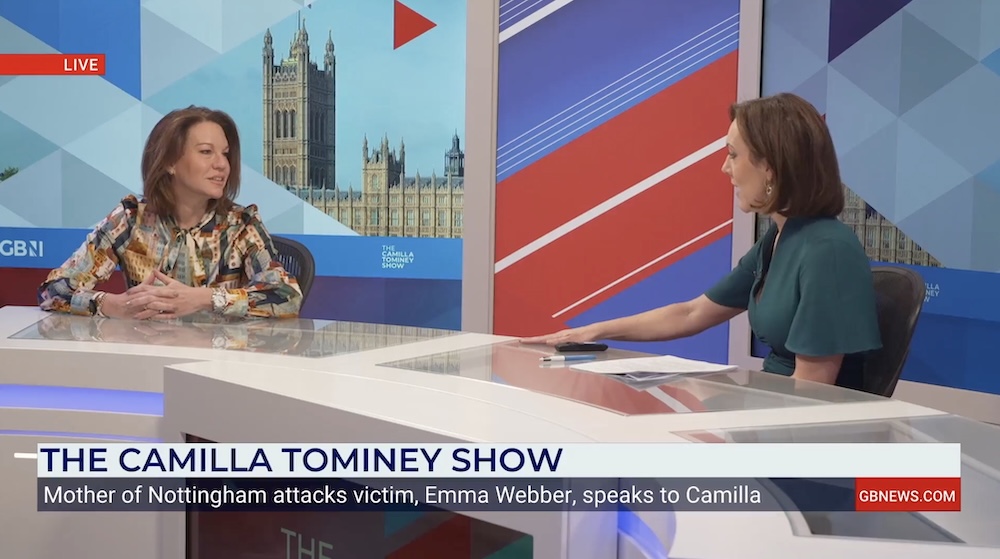
EMMA Webber, whose son Barnaby was killed in a knife attack in Nottingham, has said the police must tell the truth behind failings prior to his death.
She said she would not accept an apology from police, which came during the on-going inquiry into the attacks, for not issuing an arrest warrant that might have stopped the killer.
Emma told the Camilla Tominey Show on GB News: “Of course not. No. And what I found very irritating, and I’ve said this publicly is, and it happened again in the opening statements from all of the core participants, barristers, was unreserved apologies and condolences. We call that the copy and paste, because it’s anything but that.
“I don’t care, because that actually makes it worse really than better. What we just want is the truth, and we want the answers, and we want the accountability, we want the miscarriage of justice addressed, and then we need to get that proper fundamental, formative change in this country and improvements.”
She added: “I always try to keep things relatively simple, because the scale of failure that we’ve experienced, that Barney, Grace, and Ian and the three survivors have experienced throughout is on such a level that it’s complex and it’s so far-reaching, but essentially, every single organisation, every single institution, every single decision-maker within any of those failed, and they failed and they got it wrong.
“It wasn’t just one mistake that led to this tragedy. It was repeated failures over years and years, and he [Valdo Calocane] he was not managed, he was not treated, he was not dealt with, he was not apprehended, that the university failed, that two police forces have failed, two hospital trusts have failed, and the CPS themselves have failed.
“There’s so much we could go into, but I think it’s essentially every single level, at every single juncture, there’s failures, but there’s still a lack of accountability and ownership, and that’s what this inquiry is meant to do.
“We were told so many times that we would never get an inquiry. Then we were told, ‘Well, it won’t be a statutory inquiry,’ and there’s a significant difference between the two. And here we are. We’ve got a huge statutory inquiry that I think, in its scope of all of the institutions and organisations involved, is – I can’t find one in history larger.
“That is not reflective of this one-off tragedy, that’s reflective of a much deeper problem in our society. And we have to root out the rot, and we have to address it. It’s time to stop finger-pointing and lessons learning and putting dusty reports on shelves.”