The most common mistake London Marathon runners make happens after the finish line
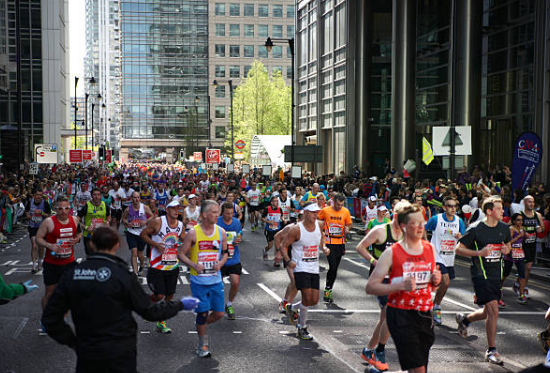
Completing a marathon is often a huge weight off your shoulders after months of early mornings, cold runs and relentless preparation. For many runners, it feels like the moment they can finally relax, but even though you should be celebrating your achievement, the work isn’t done. The recovery phase has only just begun.
A record-breaking 1.1 million people applied for the 2026 TCS London Marathon ballot, a 36% increase on 2025, with the race taking place on 26 April. With so many runners keen to take on London’s fiercest running challenge, sports-tech brand Enertor highlights the importance of recovery after a tough running session, sharing what true recovery looks like.
On the Monday after the marathon, the body has to immediately deal with the accumulated stress of tackling over 26 miles. Although soreness may start to ease after a couple of days, research shows this isn’t all it seems to be.
Studies on endurance exercise show that markers of muscle damage can remain elevated for several days after a marathon, meaning the body is still repairing long after the race is over. At the same time, recovery of muscle function, including strength and neuromuscular control, may take longer than 72 hours, even if runners feel increasingly normal within the first few days.
This creates a common misinterpretation in the days after a big race: how the body feels does not always reflect how it has actually recovered.
The risk becomes clearer when looking at large-scale running data. Research analysed by Enertor found that injury risk increased heavily when runners exceeded their recent running capacity in a single run.
Increasing a single session by more than 10% compared with the longest run in the previous 30 days was associated with 1.6x more injury risk, and this rising further as distance increases, including over 2x the risk when running distance was more than twice as long.
Ultrarunner and Enertor ambassador Danny Brunton says this early recovery window is where many runners get caught out.
“On the Monday after the marathon, it feels like you’ve come through the hardest part and you can finally switch off,” he says. “But physiologically, the body is still under stress and actively repairing.”
Danny explains that the first 24 to 72 hours are especially important because this is when many runners begin to resume normal movement too quickly, often before the body is ready for load again.
“Even though soreness starts to improve within a couple of days, deeper recovery processes are still ongoing,” he explains. “This is the time where mistakes in our recovery can be made”.
image.png
Image: Danny Brunton running The London Marathon
Danny ensures that what runners do in this window does not need to be complicated, but it should be intentional. He highlights a few simple recovery steps during this period:
Focus on gentle movement such as walking rather than returning to running too soon
Prioritise sleep, hydration and nutrition to support the body’s repair processes
Avoid only using soreness as a guide for readiness, as it can reduce within days while deeper recovery is still ongoing
Prioritise sleep, hydration and nutrition to support the body’s repair processes
Enertor has provided guidance on recommended nutrition intake after the marathon below:
0-30 minutes after: Focus on simple carbohydrates, fluids and sodium
30-120 minutes after: Have a carbohydrate and protein based meal (a 3:1 or 4:1 ratio of carbohydrates and protein is recommended)
1 day after: Keep carbohydrates high, stay hydrated and avoid alcohol
2 to 3 days after: Focus on adding healthy fats and anti-inflammatory foods to your diet
4 to 7 days after: For the most part, nutrition can return back to normal and a balanced diet can resume
Supporting the body during this period can help reduce unnecessary strain while tissues repair. Recovery tools like Enertor’s new recovery slides are designed to support recovery after tougher sessions and marathons.
image.jpeg
Image: Enertor’s new Recovery Slides
Built with UltraSole™ technology, the slides help absorb impact and reduce pressure on the foot during everyday movement.
By lowering stress on joints and soft tissue after long-distance running, they support the recovery process during a period when the body is still adapting.
image.png
Image: Danny Brunton at The London Marathon
“Recovery is not just rest,” Danny says. “It is about managing load while the body heals.”
With marathon season underway, it’s crucial to know that ignoring your recovery window could lead to bigger setbacks in the days following race day.
Danny concludes: “The biggest mistake is assuming you are recovered because you feel fine. If you respect recovery, you return stronger”.