Gilts pricing-in Starmer departure: deVere CEO

Gilt markets appear to be pricing in the exit of UK Prime Minister Keir Starmer, warns the CEO of one of the world’s largest independent financial advisory organisations.
The warning from deVere Group’s Nigel Green comes as UK long-dated borrowing costs surge to their highest levels since the late 1990s, with 30-year gilt yields pushing close to 5.8% and 20-year yields above 5.7%, according to LSEG data, as political uncertainty collides with renewed inflation pressure and fragile fiscal credibility.
The move drags UK long-term debt back into territory last seen in 1998, a period of markedly different economic conditions, but one that now serves as a reference point for how far sentiment in sovereign markets can shift when confidence weakens.
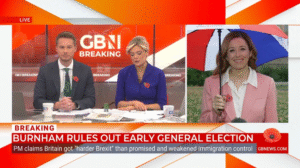
The Prime Minister is holding a cabinet meeting this morning as more than 80 of his MPs have reportedly demanded his resignation.
Nigel Green, chief executive of deVere Group, says the market is increasingly linking UK debt pricing to political continuity at the very top of government.
He comments: “The long end of the gilt curve is starting to price political turnover risk around Keir Starmer.
“It seems gilts are pricing in the exit of the Prime Minister.
“When you see 30-year yields at levels not seen since 1998, that question is being embedded into pricing.”
He adds that the Chancellor’s fiscal credibility framework, centred on strict rules around borrowing and day-to-day spending discipline, is also being stress-tested by higher yields and rising debt servicing costs.
“Rachel Reeves introduced fiscal rules designed to anchor credibility. The problem now is that markets are questioning whether those rules can be maintained unchanged if political pressure intensifies and borrowing costs remain elevated.”
Pressure within the governing party has intensified, while senior cabinet figures are said to be privately discussing transition scenarios. Markets are watching these developments closely because they directly affect perceptions of policy stability.
The deVere CEO draws a direct comparison with the Liz Truss ‘mini budget’ episode in 2022, when UK gilt markets experienced a violent repricing after concerns over fiscal credibility and policy direction triggered a rapid sell-off in long-dated debt.
“The Truss drama remains the reference point for global investors when they think about UK political risk.
“Back then, it was a fiscal shock. Today, it is a leadership and stability question. The mechanism is different, but the sensitivity is the same.”
He says the phrase increasingly circulating in institutional circles is the risk that markets begin to price a “Starmer transition scenario” rather than a stable multi-year policy framework.
“When investors hear speculation around whether Starmer can maintain authority, it changes how they model UK duration risk. This shows up first in the long end of the gilt curve.”
The sell-off has been amplified by a broader macro backdrop.
Rising oil prices have reintroduced inflation risk into the UK outlook, complicating Bank of England policy expectations and reinforcing the view that interest rates may remain higher for longer than previously assumed. This dynamic is particularly damaging for long-duration government debt.
Gilts at the 20- and 30-year maturities are most exposed, with yields moving sharply higher in recent sessions as traders reassess both inflation persistence and political stability risk.
Nigel Green says the implications extend far beyond government borrowing costs.
“When gilt yields rise at this pace, it filters through the entire financial system. Mortgage pricing, corporate funding costs and equity valuations all adjust. The UK is effectively undergoing a broad repricing of its cost of capital.”
He warns that markets are now entering a phase where political headlines carry direct financial consequences.
“We’re precisely at a point where comments about Starmer, speculation about leadership stability, and questions around fiscal continuity are no longer political noise. They are market inputs.”
For investors, the central issue is no longer whether UK debt is affordable, but whether it is predictable.
“The UK can absorb higher debt and higher rates,” says the CEO.
“What it can’t afford is uncertainty about who is steering fiscal policy and whether that direction holds and that’s what drives risk premiums.”
He concludes that markets are now focused on a single variable above all others: stability at the top of government.
“Gilts are beginning to price a UK political transition scenario, with markets reassessing the durability of Keir Starmer’s leadership.
“Do the gilt markets know something we yet don’t?”