Why Brits can no longer bank on the banks
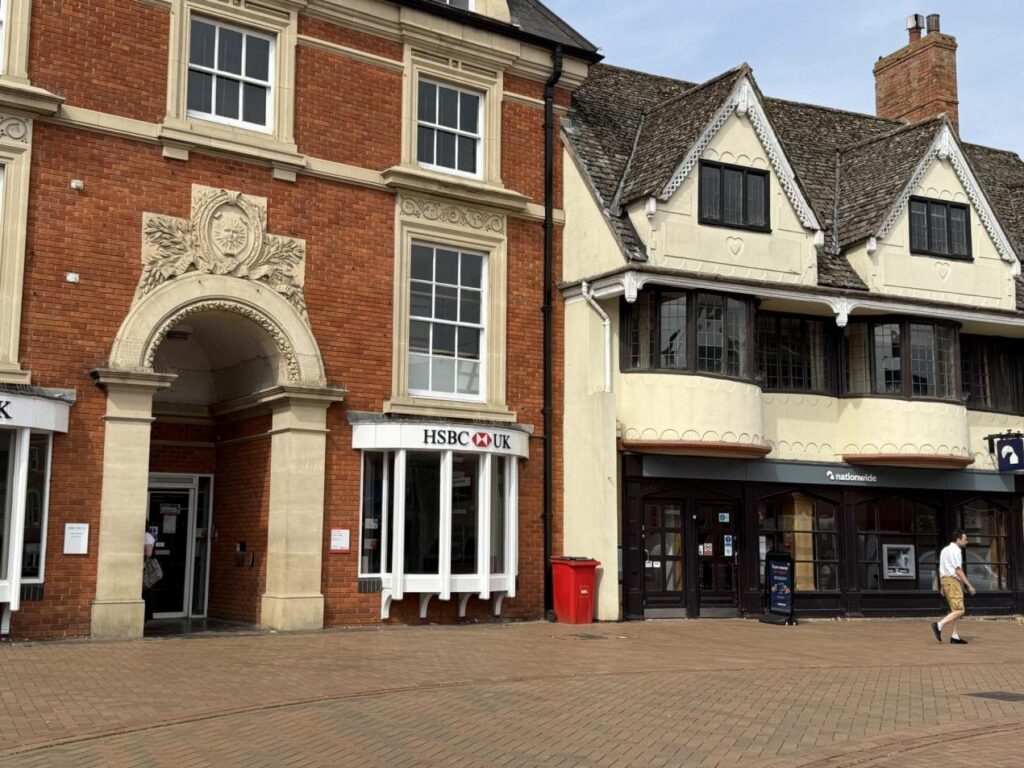
High Street banking has reached crisis point, with the planned closure of over 50 branches this month alone. The home delivery expert Parcelhero says it’s part of the High Street’s ongoing collapse amid the rise of e-commerce. It fears the Government’s new ‘Access to Banking Services’ review is too little, too late to stop the creation of banking deserts.
Individuals and SMEs cannot bank on High Street banks being there in the future, warns the home delivery expert Parcelhero. A total of 52 branch closures are slated for this month alone, meaning the Government’s newly launched ‘Access to Banking Services’ review is urgently needed. However, Parcelhero fears Britain’s town centre banks have become another High Street sector threatened with near-extinction because of the growth of internet services.
Parcelhero’s Head of Consumer Research, David Jinks M.I.L.T., says: ‘The threat to in-person banking is escalating by the week. Lloyds, Halifax and Bank of Scotland – all part of the Lloyds Banking Group – are set to shut at least 168 bank branches by the end of next year.
‘Meanwhile, 52 bank branches across a variety of banking groups will close this month alone. Santander will shutter 27 locations (the most branches in May), while NatWest will close down 15, Lloyds Bank eight and Halifax two.
‘In the light of this rapid decline, the Government has pledged to look into the continuing reduction of in-person banking and its new “Access to Banking Services” review was launched last week. Shockingly, the review acknowledges that “there are currently no existing protections for the provision of access to in-person banking services.”
‘The review will look at the state of banking through what it calls a “customer needs lens”. It will primarily focus on individuals using retail banking services, but will also include organisations such as small businesses, non-profit and community groups. However, the review is not set to conclude until October, and that could be too late given the current haemorrhaging of local banking facilities.
‘Parcelhero has long been concerned about the impact of bank branch closures on small businesses and individuals. In 2016, we published our influential report “2030: The Death of the High Street”. It predicted the closure of 100,000 stores by 2030, a finding discussed in Parliament. The report warned that without adapting to an omnichannel approach, the rise of e-commerce would decimate traditional retail, turning town centres into “ghost towns”.
‘In that report we noted: “9,000 bank and building society branches have been closed between 1989 and 2016 – and more closures are on their way.” Unfortunately, we weren’t wrong.
‘Now our sequel report, “2030: The High Street Fights Back?” has been released. A decade on from the first report, it reveals around 6,660 bank branches closed between 2016 and 2025, creating 41 “banking deserts” – areas where at least one branch shut for every 10,000 residents. Barclays was the individual bank that reduced its network the most, with 1,236 branches closing. Of banking groups, NatWest Group, which comprises NatWest, Royal Bank of Scotland and Ulster Bank, topped the list, closing 1,536 branches. Following close behind, Lloyds Banking Group, made up of Lloyds Bank, Halifax and Bank of Scotland, has shut down 1,470 sites since our first report.
‘Our new study also warns that the carnage hasn’t ended. Entire banking chains are set to vanish from our town centres. TSB could be one of the first to go. Santander took over TSB from Sabadell at the beginning of this month and it’s likely Santander will integrate TSB into the Santander UK group, phasing out the TSB brand.
‘The Co-operative Bank is also set to disappear from our High Streets. The Coventry Building Society has acquired The Co-operative Bank. Although the Co-op brand will be retained “for the time being”, it is expected to be phased out in time.
‘Virgin Money is another major banking name set to quit the High Street. In 2024 it became part of the Nationwide group and this April, following court approval, Virgin Money’s business transferred to the Nationwide Building Society. The Virgin Money brand is expected to disappear as it is integrated into Nationwide.
‘It’s also being reported that even the Halifax brand may be dropped by the Lloyds Banking Group under new plans, bringing to an end its 173-year presence on the High Street.
‘Some High Street bank branches have at least been granted a stay of execution, however. While Santander and Lloyds continue to close branches, the public and political backlash has now forced some banks to pause closures to maintain customer trust. Barclays has pledged not to close any more branches through 2026, while Nationwide has promised to keep all its locations open until at least 2030, including Virgin Money stores.
‘There are also moves by some local shops and even libraries to incorporate banking services of some kind. That’s on top of the financial services industry’s roll-out of 350 banking hubs by the end of this Parliament, discussed in the Government’s “Access to Banking Services” review. However, there is no denying the fact that, since our first report’s publication, the run on our banks has become a sprint.
‘Of course, banks are just one of the sectors under severe threat from the ongoing demise of our town centres. The High Street may not have reached a dead end by 2030 but, in this new age of retail, it will have arrived at its biggest crossroads. You can read and download our new report at https://newsroom.parcelhero.com/the-high-street-fights-back-final.pdf