The death of the department store: how Parcelhero predicted Britain’s greatest retail catastrophe
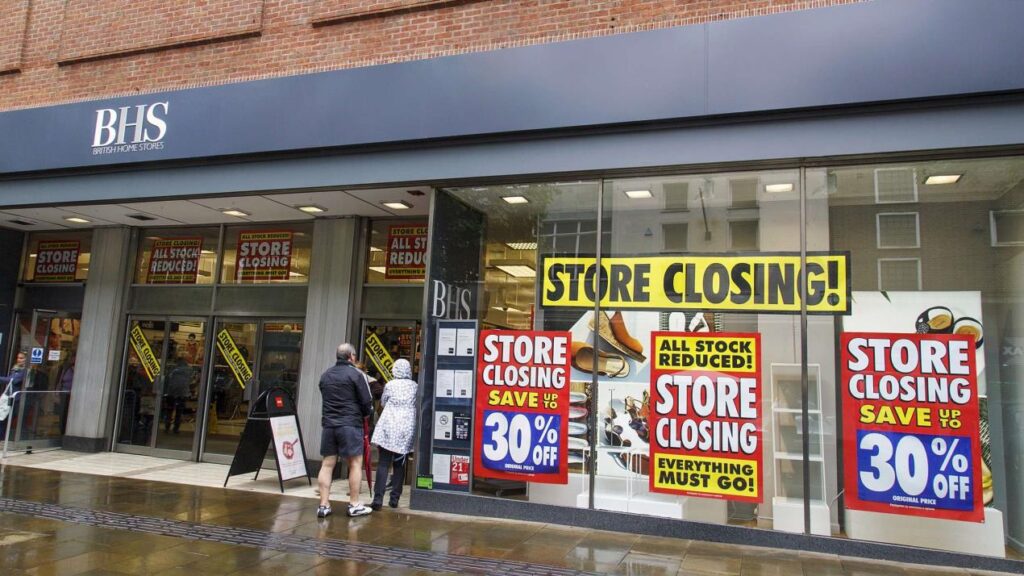
A decade on from its landmark 2016 report, ‘2030: The Death of the High Street’, the home delivery specialist Parcelhero’s ten-year prediction has been proved devastatingly correct. Over 83% of the UK’s department store space has vanished and iconic names from Debenhams to Beales have vanished from our town centres.
When the home delivery expert Parcelhero published its ‘2030: The Death of the High Street’ report in 2016, the warnings it sounded about the UK’s department store sector were stark. The report singled out department stores as a sector under existential threat, noting that they had ‘crumbled under the attack of e-commerce’ and warning that without radical reinvention they could ‘become as extinct as the local blacksmith’. At the time, with 467 large department chain stores still trading across the UK, some dismissed such forecasts as alarmist. History has proven otherwise.
Parcelhero’s 2016 report pointed specifically to the perilous state of the sector, revealing that of the 200 largest surviving department store businesses, 48 were already labelled ‘in danger’ and 53 had made a loss the previous year. The report asked: ‘How long can the sector continue?’
The collapse in numbers
Parcelhero’s newly published 2026 follow-up report, ‘2030: The High Street Fights Back?’ reveals the full scale of the devastation. The author of both reports, Parcelhero’s Head of Consumer Research, David Jinks M.I.L.T., says: ‘Since 2016, over 83% of UK department store space has disappeared – a collapse without parallel in British retail history. According to the commercial property company CoStar, the UK’s largest chains, from BHS and Beales to Debenhams and House of Fraser, had 467 stores in 2016, but that had dropped to just 79 by 2021, as Covid accelerated the structural decline that e-commerce had already set in motion.’
The roll call of the fallen is a who’s who of the British High Street:
Army & Navy: The first major collapse of a department store chain this century was Army & Navy in 2005. At its height it had 27 stores. Its demise was a precursor of things to come.
Owen Owen: At its peak, this chain had 19 stores but it collapsed into administration in 2007.
Allders: Once a significant name in retail, with a huge flagship store in Croydon, this chain had 50 stores at its height but collapsed in 2012.
BHS: Formerly British Home Stores, with 171 stores in its prime, BHS fell into receivership in 2016 with all stores closing that year. In our first report, Parcelhero predicted this would pave the way for a series of collapses. That proved to be the case.
Bentalls: This chain was once synonymous with Richmond upon Thames, and its name lives on in a shopping centre there. Bentalls had nine stores at its peak but, after being taken over by Fenwicks, the last Bentalls store was rebranded in 2017.
House of Fraser: The upmarket group, established in 1849, collapsed into administration in August 2018 and was rescued by Sports Direct’s Mike Ashley for £90 million. However, rebranded as Frasers, the 59-store estate has shrunk to just 22 locations today.
Debenhams: Founded in 1778 and one of the most recognised names in British retail, Debenhams operated 165 stores and employed more than 25,000 people before entering administration in 2019. By May 2021, every store had closed, ending 243 years of trading. The brand lives on only as ‘Britain’s online department store’ under Boohoo, which changed its name to Debenham’s Group in 2025.
Beales: The Bournemouth-based chain founded in 1881 went into administration in 2019 after failing to find a buyer. At its height it had 41 stores. A phoenix business briefly reopened several stores, but even that effort had run its course by May 2025, when the last doors closed for good.
Learning the lessons
David continues: ‘Ten years ago, we warned that department stores faced extinction unless they fundamentally reinvented themselves for the digital age. Sadly, for most of the sector, that reinvention never came. The figures in our 2026 report speak for themselves: over 83% of department store space is gone. This is not a story of retailers that were unlucky – it is a story of a sector that, with a few notable exceptions, failed to adapt to a world that had moved on.
‘Parcelhero’s 2016 report identified two waves of disruption that had already fatally undermined the department store model. The first was the emergence of supermarkets selling non-food goods, including TVs, homeware and clothing, that had historically been the preserve of the department store. The second blow, which proved decisive, was e-commerce, which offered consumers the same breadth of choice, at lower prices, without leaving their homes. For many stores, the pandemic proved the final nail in their coffin.
‘Parcelhero’s twin reports together form one of the most comprehensive records of a sector’s decline in British retail history. Only those chains that have fully integrated their online and physical store offerings, such as John Lewis, have survived the carnage. The 2026 report serves both as an epitaph for many department stores and a warning to other retail formats that complacency in the face of digital disruption carries consequences. Both the 2016 and 2026 High Street reports are available at https://www.parcelhero.com/en-gb/resources/ebooks/