Choosing the right treatment for essential tremor and Parkinson’s
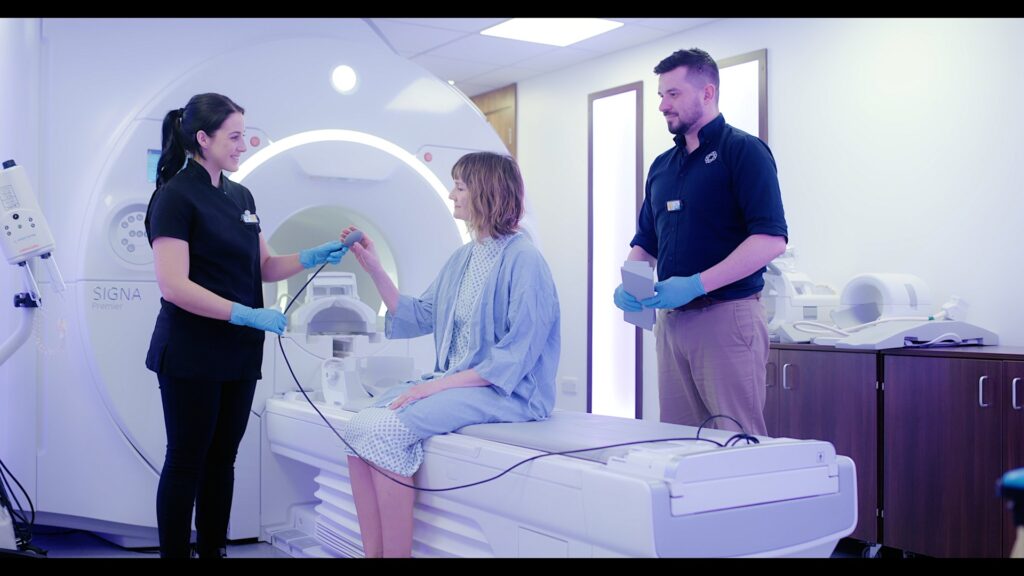
For individuals researching advanced treatments for essential tremor, Parkinson’s disease or other movement disorders, two options frequently come up – Deep Brain Stimulation (DBS) and MR-guided focused ultrasound (MRgFUS).
Both therapies are highly effective, but they differ significantly in invasiveness, adjustability, long-term outcomes and suitability for specific symptoms. Understanding these differences is essential for patients seeking the most appropriate treatment. Here, Mr Harith Akram – a consultant neurosurgeon at the world-leading not-for-profit practice Queen Square Imaging Centre – explains both treatments.
What Is Deep Brain Stimulation (DBS)?
DBS is a surgical procedure that involves implanting electrodes into targeted areas of the brain responsible for movement control. These electrodes are connected to a small, pacemaker-like battery placed under the skin in the chest. The device delivers electrical stimulation to regulate abnormal brain activity. One of DBS’s main advantages is its adjustability. Doctors can fine-tune stimulation settings over time to match changes in symptoms or disease progression.
DBS is commonly used to treat Parkinson’s disease, helping manage tremor, stiffness and movement difficulties. It is also highly effective for essential tremor when medications are no longer sufficient, and for dystonia, reducing involuntary muscle contractions. In specialised centres like Queen Square, DBS may also treat certain cases of epilepsy and obsessive-compulsive disorder when other therapies have failed.
What Is MRgFUS?
MRgFUS, or MR-guided focused ultrasound, is an incisionless and relatively non-invasive procedure that uses high-intensity ultrasound waves to create a precise lesion in a specific brain region. MRI imaging ensures pinpoint accuracy throughout the procedure. Unlike DBS, MRgFUS involves no incisions and no implanted hardware. Focused ultrasound energy targets the area responsible for tremor, often providing immediate symptom relief.
MRgFUS is primarily used to treat essential tremor, particularly when medications are ineffective, and is an option for individuals with tremor-dominant Parkinson’s disease, typically for unilateral symptoms. In some regions, it may also be used for select neuropathic pain conditions, depending on local clinical guidelines.
Further enhancement of this process was the subject of a recent study by Queen Square’s world-leading neurosurgeons, published in The BMJ Neurology Open, which marks the first clinical use of FAT1 imaging to guide MRgFUS. Traditionally, clinicians have relied on generalised brain maps to estimate the location of the target area deep within the brain – the Ventral Intermediate Nucleus (Vim) – which is extremely small and hard to visualise on standard MRI scans. FAT1 imaging overcomes this by giving surgeons a clear, direct view of the individual patient’s Vim, enabling treatment to be far more precise.
DBS vs. MRgFUS: what are the key differences?
Understanding the distinctions between these treatments helps patients make informed decisions:
Invasiveness: DBS requires surgical implantation, whereas MRgFUS is relatively non-invasive, with no incisions or implanted hardware required.
Reversibility: DBS is adjustable and reversible, while MRgFUS creates a permanent lesion.
Adjustability: DBS can be modified over time, making it ideal for progressive conditions. Conversely, an MRgFUS lesion cannot be altered post-procedure.
Treatment areas: DBS can treat both sides of the brain. MRgFUS is typically performed on one side.
Results timeline: DBS improvements build over programming sessions. MRgFUS is intended to provide immediate symptom relief.
Recovery time: DBS requires longer recovery and ongoing aftercare. MRgFUS is an outpatient procedure with same-day recovery.
Which treatment is best?
Choosing the appropriate therapy depends on the patient’s condition, goals and medical suitability. Patients should receive a full assessment with a medical specialist to determine suitability, with detailed discussions about each option.
MRgFUS may be preferable for patients who:
Prefer a relatively non-invasive, one-time procedure
Have symptoms mainly on one side
Desire immediate improvement without implanted hardware
Are medically unsuitable for more invasive procedures and anaesthetic requiring hospital admission.
DBS may be more suitable for patients who:
Require symptom control on both sides
Need long-term, adjustable treatment for progressive conditions
Have multiple Parkinson’s symptoms beyond tremor
Are comfortable with implanted hardware
Effectiveness of MRgFUS v DBS
For essential tremor and tremor-dominant Parkinson’s, both therapies are highly effective. MRgFUS offers rapid, unilateral tremor control with minimal recovery time, while DBS provides more comprehensive management for complex Parkinson’s symptoms and bilateral treatment needs.
What next?
Both MRgFUS and DBS are transformative therapies, offering life-changing results. MRgFUS provides a fast, incision-free solution with immediate tremor relief, while DBS delivers adjustable, long-term symptom control. The choice depends on medical profile, lifestyle preferences, and long-term goals. Both procedures are NICE-approved and recognised by NHS England.
Patients considering either treatment are advised to consult a neurologist specialising in movement disorders.