Government struggling to eliminate migrant hotels, says Oxford University monitoring group
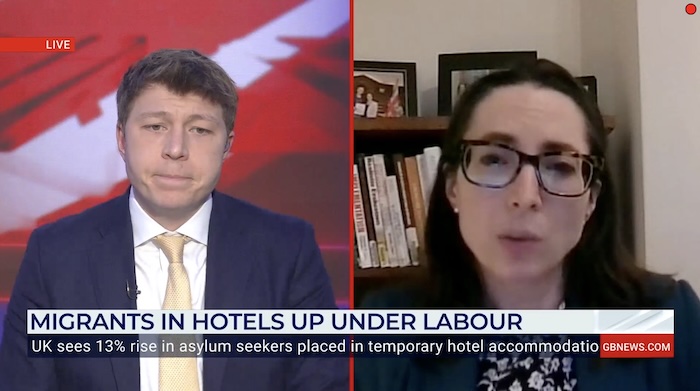
THE director of Oxford University’s Migration Observatory said the government is “struggling” to meet its pledge to end the use of hotels to house migrants.
Madeleine Sumption MBE told Patrick Christys Tonight on GB News: “The government has this high-profile pledge to eliminate the use of hotels for asylum seekers, and it is clearly struggling on that point, because the number of people in hotels has gone up.
“There are basically a couple of different reasons for that. One is that, because the number of applications continues to be at record high, is just getting through the applications, let alone trying to address some of the backlog of people waiting for a decision who are being supported in the same accommodation, is quite a challenge.
“The government is actually now making quite a lot of initial decisions, much more than in previous years. But you’ve got those high numbers of applications, and then there’s this new problem which has emerged, which is that people who have been refused asylum then have the ability to appeal, and during that period, they remain in asylum accommodation.
“Now the court system has developed a new big backlog, and so that’s a big part of the issue. The Labour government has put out some proposals saying that they want to try and streamline that system, make it more efficient and reduce people’s ability to make the various different legal challenges.
Madeleine Sumption GB News.jpeg
“But that is something to be honest, that you know, successive administrations have struggled with over the last 20 years. So it’s hard to know exactly how those reforms are going to go.”
Asked how much of the money they earn stays in the country, she said: “Most of it does stay in Britain. The data aren’t brilliant on this, but there are some data that suggests that the majority of migrants are not sending remittances.
“Where they do, we’re looking at sort of a few percent of their overall earnings, so that it adds up. Obviously, it’s not trivial, but the remittances going back to family members at home is not the major factor that affects their economic contribution. The key thing really is, are people able to find a job, and then is it a skilled, well-paid job when they find one?”