How one day of tube strikes offset the CO2 equivalent of 21 private jets
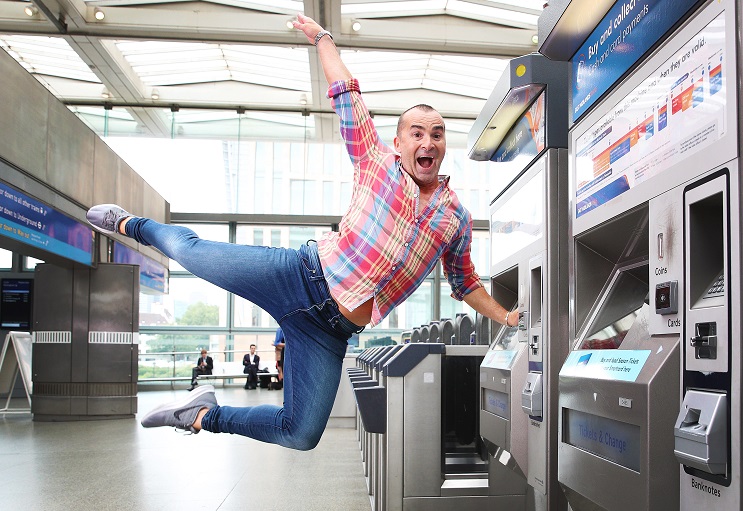
The London Underground strikes from 5-12th September delivered a surprising green impact. By Wednesday, the number of Lime Bike trips had surged by 74% week-on-week, with journeys longer in both distance and duration.
Research from bicycle retailer Paul’s Cycles estimates that if just half of London commuters swapped the tube for a Lime Bike on that Wednesday, 6,328.35 kg (76.3 tonnes) of CO2e would have been saved.
These carbon savings are equivalent to:
Chartering 21 private jets
Driving the length of the UK 396 times
Heating the average household’s boiler for 2.5 years
Talking to ChatGPT for 254,427 hours
Producing 32,480 McDonald’s Big Macs
While using public transport is a better alternative to driving or taking a taxi, currently, 84% of the London Underground’s power comes from non-renewable sources. Though there are plans for this to improve by 2030, every Lime bike is already powered with renewable energy.
Reducing reliance on the London Underground could gradually lead to significant emissions reductions, as lower demand would likely result in a decreased service frequency.
Lime expanded significantly this year, investing £20 million in London in January. The London Underground strikes led to a 69% spike in search interest for the topic of Lime Bikes between the 6th and 8th of September.
Tom Thornley, Managing Director of Paul’s Cycles, said, “The ‘try before you buy’ effect and one-way convenience of Lime Bikes made cycling a credible default alternative.”
Thornley believes that while this was a temporary solution, it could have a lasting impact. He said, “People cycling out of necessity is still a win for those of us who want to see more Brits on bikes. It’s like a test run, and people might not stick with it every day, but now cycling’s on their radar. Maybe next time they’re running late, the Tube’s packed, or it’s a sunny day, they’ll hop on a bike instead.”
Over one-third (39%) of Lime e-bike trips are made for commuting purposes. However, there are still barriers to people cycling to work every day. According to Thornley, these include “commute distance, weather conditions, road confidence and access to bicycle storage”.
While bicycle storage is one advantage offered by Lime, the expansion of docking bays across London has faced some resistance from residents and businesses affected by new bays outside their properties, as well as concerns about dockless bikes not being returned to designated areas.
At the same time, the rise of dockless systems has lowered the barrier to entry and normalised cycling as a mode of transport. Thornley said, “London’s dockless bike usage has surged, becoming a noticeable part of rush-hour traffic and operators reporting a significant influx of first-time riders.”
As a cycling retailer, Thornley has noticed a similarly positive trend at Paul’s Cycles: “In the last few months, we’ve had more conversations in-store with people who are new to cycling or returning after a long break, asking about the right setup for everyday use.
“That shift suggests more customers are starting to see bikes not just as leisure purchases, but as a genuine transport solution for their daily lives.”
For those looking to give cycling commuting a go, Thornley recommends starting with a trial of your regular route: “Try out your door-to-door time on a non-working day first, then repeat it on a busier day. Take note of where the nearest hire bikes are, or, if you’re using your own bike, where you’ll lock it. Think about what you’ll wear, and consider keeping shoes, jackets and any other spare clothes at your workplace to make things easier.”
Thinking about getting your own bike to make your commute quicker and more eco-friendly? You might be able to get support through the Cycle to Work Scheme: https://www.paulscycles.co.uk/pages/schemes/