New study reveals the most popular and valuable antiques handled in 2025, with furniture leading the way at more than £85,000 collectively
Gen Z and Millennial consumers are helping drive a major resurgence in vintage shopping, with the trend expected to gain further momentum in 2026.
According to Pinterest’s 2026 Trend Report, aesthetics, such as poetcore, Neodeco, brooched, and the opera aesthetic are set to shape interiors and fashion choices.
Meanwhile, interest in antiquing is accelerating. Google searches for “antique trends” have surged by 2,989% year-on-year, while searches for “antiquing” have increased by 31% in 2026.
It’s no secret that young consumers are more eco and budget-conscious than ever before, and investing in meaningful, long-lasting items is a great way to establish identity and add character to homes.
Antiques are no longer just heirlooms – they’re becoming a new status symbol for a generation that values sustainability, individuality and long-term value over mass production.
But while interest is growing, many younger buyers may not know which antiques hold real value, or where to begin when shopping for them.
With that in mind, antiques shipping provider PACK & SEND conducted a study to reveal the most popular and valuable antiques of the last year, as well as the best places in the UK to shop for them.
The most popular and valuable antiques
#1 – Furniture
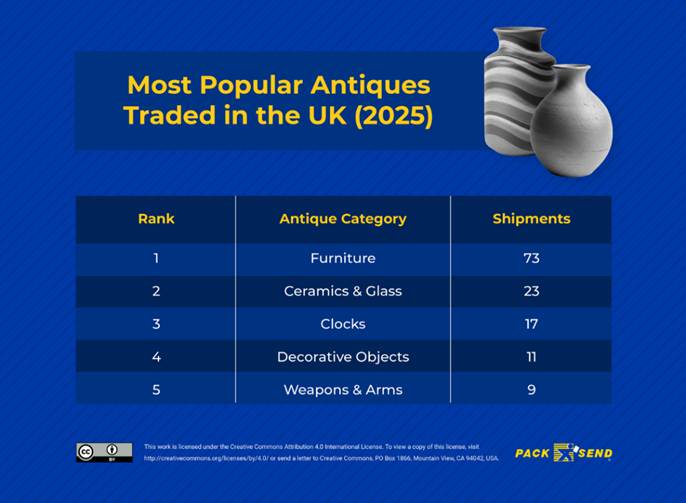
Antique furniture was by far the most popular category, accounting for over half (55%) of all pieces shipped in 2025. Collectively, these items were worth more than £85,000, with an average of around £800 per piece. A £7,500 antique desk was the most valuable item in this category to be sold and shipped.
Furniture is the most common item to purchase second-hand, with 28.4% of people buying pre-owned items. Antique furniture is often highly valued due to craftsmanship and the use of unique or long-lasting materials.
#2 – Ceramics & Glass
Over £74,000 worth of antique ceramics and glass was shipped in 2025, making up 17% of all antiques and averaging £700 per piece.
Vases, high-value tableware, and crystal are just some examples of pieces that can increase in value over time, with one piece of old pottery worth £30,000. Other sought-after materials include porcelain and coloured glass, with coloured glass thrifting becoming particularly popular on social media.
A £30,000 piece of old pottery was the most valuable category antique shipped last year.
#3 – Clocks
Clocks are a popular investment category among collectors which made up 13% of shipped antiques last year. Timepieces are often the antiques that gain the most value, but this can depend on brand, design, and when it was made.
Among some of the valuable timepieces shipped last year was a glass clock valued at £10,000. Handmade clocks from earlier periods, like the 17th and 18th centuries, are typically more valuable due to subtle uniqueness in craftsmanship.
#4 – Decorative Objects
Making up 8% of the antiques shipped last year, decorative antiques are often popular with shoppers looking for smaller, statement pieces for the home.
Art Nouveau and Art Deco pieces are expected to be key trends this year, so antique lovers may be searching for collectables like Tiffany lamps and Art Nouveau glass.
One of the most valuable decorative antiques shipped in 2025 was an oak box with a hinged lid, costing £20,000.
Rare and valuable individual antiques
Dedicated antique hunters looking for more niche pieces purchased and shipped some interesting finds in 2025.
Sporting memorabilia and religious artefacts were amongst the most valuable individual pieces sold and shipped. Amongst them was a rare Harem key and lock valued at £30,000 and two antique golf clubs and balls, worth £6,800.
The research also highlights where in the UK demand for antiques is strongest, with several cities emerging as key hotspots for shoppers. So, where are the best places to go antiquing?
#1 – London
The capital ranks as the UK’s top destination for antique shopping.
Home to famous antiques and second-hand hotspots like Portobello Road, Camden, and Notting Hill, antique lovers are spoiled for choice with over 350 dedicated shops across the city, and the average store has 4.6-star reviews.
Searches for ‘antique stores’ by Londoners increased by as much as 75% in 2026, suggesting the hobby is steadily gaining popularity.
#2 – Edinburgh
Scottish antiquers will be happy to hear that Edinburgh is the second-best city to find a hidden antique gem.
The city has a rich history and culture, so locals and visitors alike are bound to find a treasure in the 30 stores spread across the area, with an average store rating of 4.5 stars.
#3 – Brighton & Hove
Considered one of the best ‘boho’ communities in the UK, the area has approximately 23 antique stores with an average rating of 4.79 stars.
Completing the top five are Sheffield and Bristol, with 20 stores each. Local interest in ‘antique stores’ has increased by 21% this year, while in Bristol it’s increased by 51%.
You can view the full study here.
Mahsud Ahmed, Product Specialist at PACK & SEND, commented on the findings:
“With sustainability and a desire for uniqueness shaping shopping habits, particularly among young consumers, it’s hardly surprising that more people are investing in antiques.
“The study shows that furniture and ceramics are popular, likely due to their ability to consistently retain strong value, with many pieces worth hundreds or even thousands of pounds.
“It’s not just about what you’re shopping for, but where you’re shopping for it. Heading to highly-rated, established antiquing hotspots can improve the chances of finding valuable pieces, particularly where there are specialist stores and knowledgeable sellers.”
Kayleigh Davies, Antiques Expert at Auctionet, shared her top tips for antique gem hunting:
“If you’re new to antiquing, start by buying items you love. The best collectors buy something they’re drawn to, as a real interest makes it easier to care about the details and develop some expertise.
“Learning about maker’s marks is a great skill to develop, because they often give you a date, a place and a maker. The best way to know if an antique is valuable or not is also to handle it. Go to fairs, auctions and shops and have a good look – as your antiques knowledge grows, your gut will often tell you when a piece is “off.”
“Remember to be suspicious of items in too good a condition. A 100-year-old chair should have some wear and tear, but equally, age doesn’t always indicate value. Scarcity, changing trends and ways of living affect value.
“Finally, don’t just look at what prices people are asking for online and check sold prices to see what items realistically sell for.