Not The Benny Hill Show with Keith Allen Tour Dates and Venues Announced
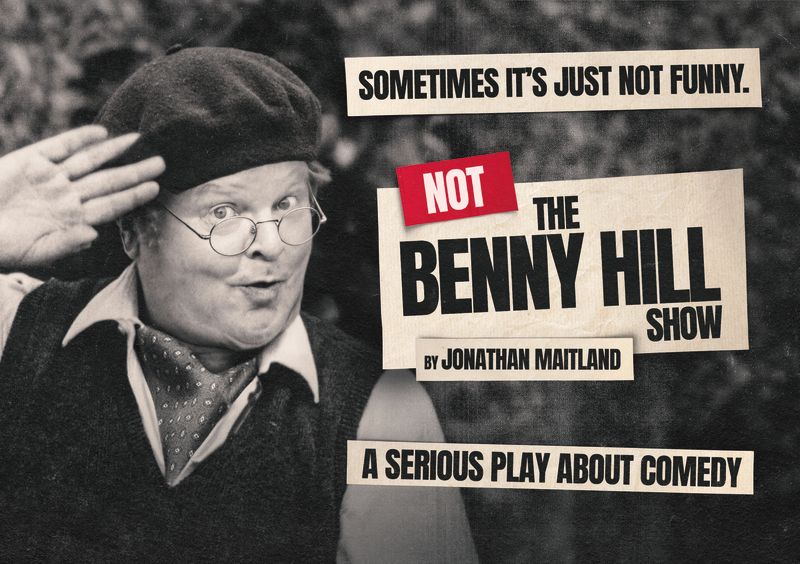
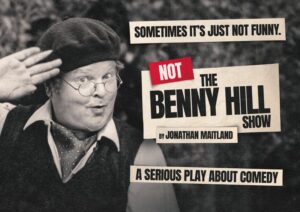
A darkly comic, timely look at cancel culture, shifting sensibilities and evolving attitudes, Not The Benny Hill Show asks what happens when the world stops laughing along and whether a legacy can survive the verdict of later generations. Loosely based on real people and events, the audience is transported to 1989, when the Berlin Wall is falling, communism is on the way out in Eastern Europe, and Benny Hill is the biggest comedian in the UK. Summoned to the office of ITV’s Controller of Comedy, he expects a warm welcome after making the channel hundreds of millions of pounds, but the meeting doesn’t go as planned. Facing his boss who’s about to fire him as well as awkward clashes with Charlotte, a proud feminist secretary, and Genghis, an angry young comedian, Benny discovers that the world has moved on. But can he?
Benny Hill (1924-1992) was an English comedian, actor, writer and musician. He made his television debut in 1949, and in 1955 The Benny Hill Show first aired. It ran for over thirty years and, at its peak, was among the most watched programmes in the UK. Exported to more than 100 countries, it won BAFTAs and a Rose d’Or and was nominated for an Emmy. A comedy variety show, it featured Hill in a range of sketches blending mime, parody and slapstick. In 1989, Thames Television cancelled the show amid declining ratings and rising production costs. Hill counted many celebrities among his fans, including Michael Jackson, Mike Myers and the rappers Busta Rhymes and Snoop Dogg. Though one of the most watched and financially successful British comedians of all time, his style of comedy faced heavy criticism. Later in his career, alternative comedians such as Ben Elton publicly attacked him amid the rise of a new comic style, and in the years since his death, his work has increasingly been criticised as dated and offensive.
Writer Jonathan Maitland said, “The play will shed light on a deeply peculiar man, but it isn’t really about him. What happened to Benny Hill in 1989 was a turning point and a key moment in our culture.”
Charlotte Lydia Riley, historian of twentieth-century Britain at the University of Southampton said ”1989 was a complicated moment in progressive politics. A decade of Thatcherism had hollowed out communities, Section 28 had been passed the year before, and the GLC had been abolished in 1986. Despite this, progressive activists – feminists, gay rights activists, anti-racist campaigners – were gaining a foothold, but slowly. The establishment was never going to concede power overnight and not all change turned out to be as progressive as claimed. This play captures the reality and messiness of a pivotal year in British political and cultural history.”
Jonathan Maitland is a playwright and former journalist having worked for the BBC across Radio 4, BBC News and presenting and producing shows for BBC 1. Maitland’s debut stage play Dead Sheep (2015) produced at Park Theatre became the most successful production in the theatre’s history. This record was broken by his second play also staged at Park Theatre An Audience With Jimmy Saville (2015), which went on to transfer to Edinburgh Festival Fringe. Further works at Park Theatre include Deny Deny Deny (2016) and the box office record breaking The Last Temptation of Boris Johnson (2019) which went on to complete an eight-week national tour in 2020. In 2023 Maitland presented the premiere of his new play The Interview at Park Theatre and his BBC Radio 4 adaptation of Wasps in a Jam Jar. Currently touring the country after acclaimed runs at Queen’s Theatre Hornchurch, Southwark Playhouse and Leicester Square Theatre is his play with music Wilko: Love and Death and Rock ‘n’ Roll, the story of Dr. Feelgood co-founder and musical icon Wilko Johnson.