Pat McFadden denies he had any role in pressuring Olly Robbins to clear Peter Mandelson
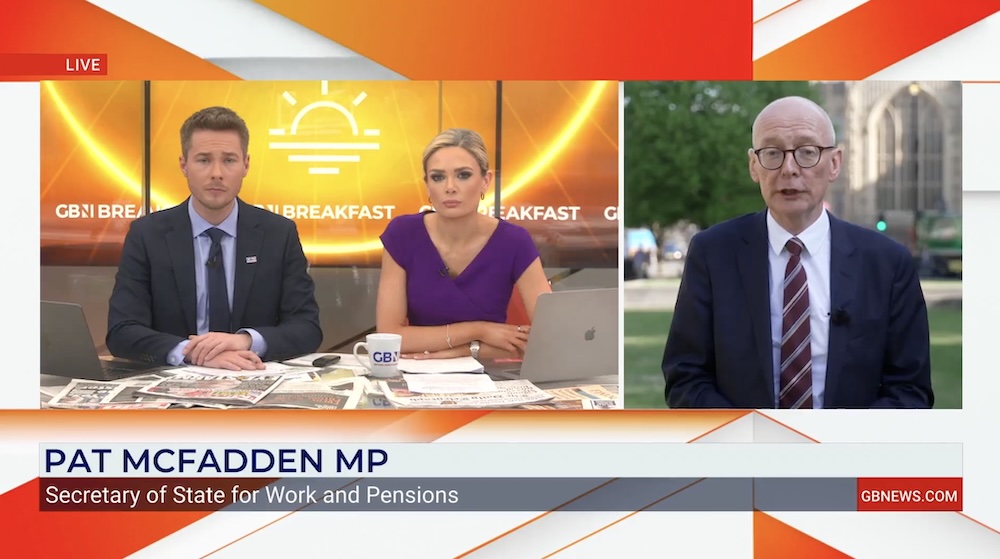
Work and Pensions Secretary Pat McFadden has denied that he had any role in pressuring Olly Robbins to clear the appointment of Peter Mandelson when he was head of the Cabinet Office.
Asked if he approved of the appointment, McFadden told GB News: “Well, I could see the rationale for it. The rationale was really twofold. Political appointments to ambassador positions are unusual, but they’re not unheard of. There’s been a few over the years.
“The two reasons really for the appointment were, we were dealing with a highly political US administration, and this was a very experienced political operator. Secondly, trade and business were going to be at the heart of the relationship, and this was someone who had served, most people thought successfully, as a UK business minister and a European Trade Commissioner, and that rationale was quite widely accepted at the time of the appointment.
“It wasn’t greeted with horror. It wasn’t greeted as though he had been plucked from obscurity or disgrace. He was a high profile political figure and commentator at the time of the appointment. Now, plenty has come out since that shows the appointment was a mistake, but that was the rationale for it, which was quite widely accepted at the time.”
Asked why his was appointed when his was a proven liar who had been sacked from ministerial positions twice previously, McFadden said: “You see red flags, but actually, if you look at the media coverage of the time, including comments from our opponents in both the Tory party and the Reform party, it was quite widely welcomed and people weren’t saying the things that you’ve just said in your question.
“Now, I accept an awful lot has come out since, particularly on the Epstein files, but also possibly as a result of this security vetting, where there may be other things unrelated to the Epstein files which caused them to say he shouldn’t be appointed. But that’s not how it was greeted at the time.
“This isn’t to say that the appointment didn’t turn out to be a mistake. I’m not saying that, but this is only understandable to your viewers if the rationale for the original appointment is set out, otherwise we are simply lost in a series of processes about forms and vetting and all of this, which is a lot of what’s been discussed over the past week.
“Cabinet secretaries of state are not involved in the vetting process. But the point you make has relevance in this sense. Ollie Robbins said he took the view there should be a vetting process that this was important. And where this critical disagreement between him and the Prime Minister comes down to, it is he thought that he should make the final judgment on the results of that when it was shown that Peter Mandelson hadn’t passed the vetting and the Prime Minister didn’t believe it was his judgement to make. And that is the critical disagreement among all the discussion over the past week.”
He was asked if the pressure to clear Mandelson came from him as head of the Cabinet Office at the time or the Prime Minister: “Number 10 deny there was this pressure. It certainly wasn’t coming from me, and Olly Robbins said he didn’t pay any heed to it anyway.
“So the real point about pressure does lead you to this point about judgement, which is whose judgement was it to take the view on the final results of that vetting process? The Prime Minister believes that information should have been shared with him.
“The chair of the Foreign Affairs Select Committee, although she’d be very critical of the process, also believes the information should have been shared with the Prime Minister. But Olly Robbins, as we saw in his evidence yesterday, doesn’t believe that to be the case.”
On Robbins saying that it would have been difficult to block Mandelson’s appointment because it had already been announced, McFadden said: “He did say that, and the appointment had been announced. That is true, but it was also made clear to Peter Mandelson that it was announced subject to clearance, and in fact, that’s been published in one of the emails that’s been published as a result of the resolution passed by parliament on this a month or two ago.
“So I think it was clear to everybody that it was subject to clearance, and certainly the Prime Minister’s view is that had he known the result of that vetting, it would have been material to the final decision.”
Pressed again on Robbins’ claim of constant pressure from the Cabinet Office, Mc Fadden said: “Well, Number 10, have denied there was constant pressure. I certainly wasn’t involved in any contacts with the Foreign Office over this.
“I think the critical thing about this argument about pressure is he said he paid no heed to it anyway. He did the proper process. And what’s at dispute here is, whose decision should it really have been on the final result of that vetting, Sir Olly Robbins or the Prime Minister’s and Sir Olly Robin’s answer to that question is he was in his rights to take that decision.
“The Prime Minister believes the information should have been passed to him, and this is relevant, not just at the time of the initial appointment, but for all the subsequent statements that have been made since.
“And in fact, Olly Robbins said in his evidence yesterday, he was worried about some of the things that the Prime Minister was saying after the appointment had took place, and the reason the Prime Minister was saying those things was because he thought vetting had been passed, and it turns out that wasn’t the case.”