House Proud Britain: The cities spending the most to transform their homes

New data suggests Britain has become a nation of home improvers, with households across the country looking for creative ways to style spaces that reflect their personalities, lifestyles and aspirations, without it costing the earth to do so.
From statement furniture and colour-drenched rooms to perfectly organised storage solutions and handcrafted pieces, homes are increasingly becoming a reflection of how people want to live.
Analysis of FableRoom’s customer sales over the past 12 months reveals that Britain’s home transformation trends are spreading beyond London, with smaller cities emerging as some of the country’s biggest home improvement hotspots.
While London remains Britain’s largest interiors market by total revenue, the data reveals that customers outside the capital are often making higher-value purchases.
Milton Keynes tops the rankings for average order value, with customers spending £253 per home furnishing purchase – ahead of Newcastle upon Tyne (£232), London (£226) and St Albans (£226).
The findings suggest that being house proud is no longer simply about adding decorative touches. Across Britain, Britons are investing in furniture and interiors that improve how their homes look, feel and function.
Anushka Mahanti, co-founder of FableRoom, comments: “Creator-led content has changed the way we discover ideas for our homes. We’re constantly exposed to new styling guides, layouts and home inspiration, and people are increasingly bringing those ideas into their own spaces.
FableRoom is a manufacturer-to-consumer brand, which means our customers get to create magazine worthy looks at home, without the luxury price tags. Being able to buy beautiful things for your home at 30-60% less than traditional homeware retail brands, has let our customers experiment with pairing different handcrafted products, building their own styling language, reflective of their personalities.”
Britain’s highest-spending interiors cities
City
Average order value (£)
Milton Keynes
£253
Newcastle upon Tyne
£232
London
£226
St Albans
£226
Westminster
£223
Birmingham
£223
Edinburgh
£223
Chelmsford
£223
Glasgow
£222
Brighton and Hove
£218
Oxford
£217
Manchester
£214
Liverpool
£213
Salford
£203
Winchester
£190
Based on FableRoom customer purchases from June 2025 to June 2026.
The generation gap shaping Britain’s changing homes
The data suggests Britain’s appetite for better homes spans generations, but different cities are being transformed by different groups of households.
In London, younger customers are driving the interiors market, with 71% of purchases coming from customers aged 25-44. Manchester follows a similar pattern, with more than half of customers falling within this age group.
The trend reflects a generation using interiors to personalise first homes, rental properties and recently purchased spaces – turning houses and flats into extensions of their identity.
However, some of Britain’s strongest interiors markets are being driven by older customers. In Oxford, 45% of customers are aged 55+, while Liverpool sees 44% of purchases from customers aged 55+.
The findings suggest Britain’s passion for home design is being fuelled by different motivations – from younger households creating their ideal first spaces to older generations investing in statement furniture and long-term upgrades.
Britain is investing in furniture, not just finishing touches
FableRoom’s data suggests customers are moving beyond quick décor updates and increasingly investing in furniture that transforms how a room looks and works.
Cabinets (£253), coffee tables (£207) and rugs (£186) attract the highest average order values, while sales of coffee tables (+50%), sideboards (+46%) and hand-knotted rugs (+40%) have all grown significantly over the past year.
The rise of cabinets is particularly revealing. As social media continues to showcase minimalist, clutter-free homes, Britons appear to be investing in smarter storage solutions to create calmer, more organised spaces.
Creating a beautiful home is increasingly about creating a functional one too.
The end of grey décor?
The data also suggests Britain’s long-running love for grey interiors may finally be coming to an end.
Sales of rust (+109%), natural tones (+73%) and warm wood (+11%) have all increased over the past year, while demand for grey (-52%), white (-42%) and sage green (-62%) has fallen sharply.
The shift suggests households are moving away from cool, showroom-style interiors towards warmer spaces that feel more personal, comfortable and lived-in.
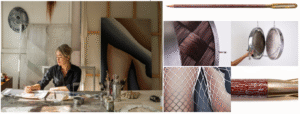
This appetite for individuality is also reflected in the rise of handcrafted finishes, with sales of artisan bone inlay furniture increasing by 73%, suggesting Britons are looking for pieces with character rather than mass-produced minimalism.
Anushka adds :“We’ve seen people really embrace the rise of anti-luxury luxury. The way a space feels is becoming increasingly important at a time when Britons are coping with external stresses. Homeware shoppers are also becoming increasingly value driven. They don’t want to buy cheap, but they do want to buy high quality products that last long, without them costing the earth.
“What’s particularly interesting is that people aren’t just buying decorative accessories anymore. They’re investing in furniture that changes how a room looks and works. Cabinets being our biggest spending category is a great example – everyone wants a home that feels calm and organised, even if some of the everyday clutter is simply hidden away.
“We’re also seeing a move away from the cool grey interiors that dominated for years. Households are embracing warmer colours, natural materials and handcrafted pieces that make a home feel personal rather than like a showroom.”